 ManaCurve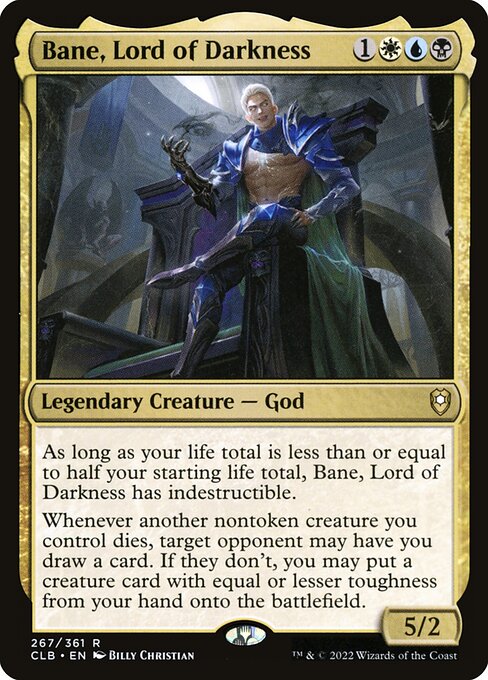
Shared Deck
Bane
Commander:
Cards
100
Identity
BUW
Selected target
2
Updated (UTC)
Oct 4, 2026
5.4
Power Estimate
A heuristic signal from the current list, not a measured win rate.
B3 from available evidence; assessment incomplete
These estimates support a table conversation; they do not prove play strength. A range shows model disagreement, not a confidence interval.
Card structure: unavailable
62/63 nonland copies with evidence
Demand and mana efficiency: B3 · 5.4/10
63/63 nonland copies with evidence
100 cards checked, including 1 commander copies · 61 curated combo packages checked · checked rules minimum B1
Assessment receipts
list-evidence-2026-10-10-v4
Input 83b480b7e908ce9fad387312ee477b0e42530f3f95e587edf40f6e06fb7459df
texture-fixed-b2-faces-v2: Oracle card text and mana values; 0 card copies with unknown face provenance; 1 card copies with face availability not modeled; 61 curated combo packages checked
demand-impact-v1: Catalog USD prices and community inclusion ranks; Mana efficiency
Power Snapshot
B3 from available evidence; assessment incomplete • 0 game changers detected
Efficiency
6.9
Impact
488
Score
494
Tipping point 4 • playability 72%
Estimated deck value $23.20
Generator Trust
Deck Intelligence
Strategy Fit
41/100
Ramp 47 · Draw 20 · Interaction 6
Foundation
65/100
thin base · T3 lands 80%
Win Plan
100%
Combat pressure · ready
Plan Coherence
98/100
tribal · clear
Opening Mix
63%
2–4 lands + a cheap card · mana unverified
Win Plan evidence
Combat pressure: 50 enablers · 6 payoffs · 15 support
This measures recognized pieces in the list, not a chance of winning or proof that you can execute the plan now.
Plan Coherence evidence
Method: weighted theme and role scores · tribal
Weighted score inputs: Synergy 100 · Draw 100 · Interaction 68.3 · Win pieces 100 · Combo 100 (each /100)
Off-theme role cards: 11.3% of nonland copies · Construct-adjusted share: 9.7% of nonland copies (not used by the weighted method)
- Stabilized plan score: synergy already carries the role-soup penalty, so the primary read avoids the legacy double-penalty.
Foundation watchlist
Base vs commander
Commander tuning should preserve base-function floors before adding more theme density.
Value engines outnumber concrete closers; the deck may need clearer ways to end games.
Opening composition v2 · exact 7-card draws from 99 cards · 37 playable land faces (0 draft-only sources excluded) · 19 spells at mana value 0–2 · 8 ramp-tagged and 8 draw-tagged cards at mana value 0–3. Spell costs recorded for 62/62; missing mana values 0 (assumed 3), types 0, land text 0, nonland text 0. Land policy playable-land-faces-v1; front lands and verified modal land choices count, conditional transform backs do not. Multi-face cards 1 retain combined metadata for other estimates; invalid quantity rows excluded 0. Mana colors, tapped lands, activation costs, spending restrictions, draw conditions, multi-face availability and mulligans are not simulated.
Deck Strategy
This deck primarily plays as a tribal strategy and rewards disciplined sequencing.
In the early game, set up mana and hand quality before committing key threats. Midgame plans should build board presence through synergistic engines and incremental pressure. Your late-game priority is to leverage your strongest threats to convert a stable board into a finish.
Strategy Graph
Tribal: Sacrifice Recursion Engine into Library/Hand Pressure.
hybrid - Based on the strongest recognized support, the list has a primary Sacrifice plan with a credible Tokens package.
Counter support is unverified
6 matched card copies × 0.1 + 0 archetype bonus, capped at 1 = 0.60 candidate score. This is a heuristic score, not a win probability.
Core eligibility: four-copy threshold met; commander heuristic not matched; archetype not matched. A counter core is eligible, but another core takes precedence.
Matches can include placement, spending, opponent-directed effects and resource counters. Own growth, compatible recipients, repeatability and a finishing route need separate evidence.
counter-support-v1
Life-Resource Commander
Bane, Lord of Darkness treats life gain or life payment as an engine resource that needs stabilizers and payoffs.
Sacrifice Recursion Engine
Selected token makers provide a matching kind of material for sacrifice costs. Creating and spending that material still requires the printed costs and restrictions.
Death/Drain Payoffs
Life-drain and death-trigger payoffs convert engine loops into table pressure.
Library/Hand Pressure
Candidate plan inferred from the cards shown; required setup and effectiveness are not verified.
Plan A: Library/Hand Pressure
Plan A wants to attack cards in hand or library until opponents run out of resources or lose to draw/mill pressure.
Plan B: Life-Resource Payoff
This pivot can gain or spend life repeatedly, then convert the life-total swing into cards, damage, or a finisher.
Fallback: Attrition
If the clean finish is not available, the deck should still convert its engine into pressure through this backup route.
Establish Resources
Start with the shown resource cards. Check their costs, conditions and fit with the engine before relying on them.
Turn On The Engine
Selected token makers provide a matching kind of material for sacrifice costs. Creating and spending that material still requires the printed costs and restrictions.
Convert Into Payoff
Use the engine to generate pressure, cards, mana, or attrition that changes the table state.
Close The Game
Finish through Library/Hand Pressure.
Recommendations
Strategy Readiness (Bracket 3)
41%Pace target average MV: 3.05
WARN
Interaction density is low against faster or combo-heavy tables.
WARN
B3 from available evidence; assessment incomplete
Validation passed · Rules check for the selected target
Cards checked 100 · Game changers 0
· Deck texture looks closer to bracket 2 than bracket 1 based on current efficiency, interaction, and combo signals.